Table of Contents
The landscape of product liability claims in 2026 has become increasingly complex as consumer products integrate advanced electronics and autonomous features.
For legal professionals and consumers alike, understanding the boundaries of corporate accountability is essential.
At Elite Tort Claims, we analyze how modern safety standards are applied when defective products lead to personal injury or property damage.
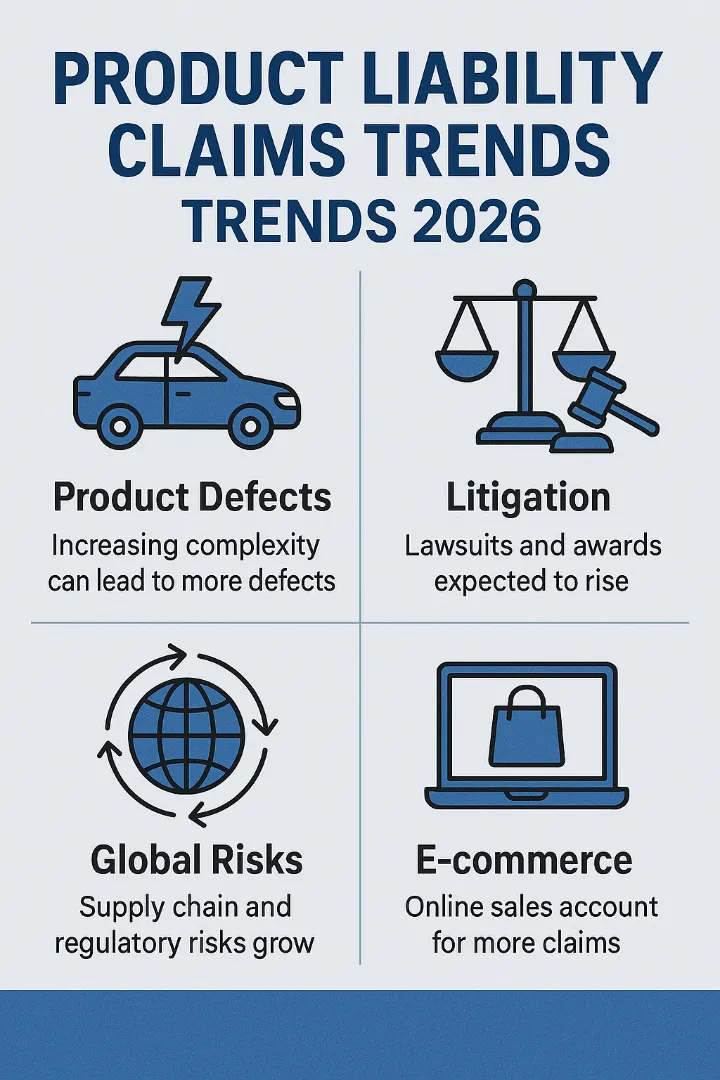
In 2026, product liability claims often hinge on the concept of “failure to warn” or manufacturing defects in smart technologies.
As companies rush to bring innovative products to market, the risk of professional negligence during the design phase increases.
Strategic liability oversight is now a mandatory requirement for manufacturers to ensure that their products meet rigorous safety standards before reaching the global market.
Failure to do so often results in high-stakes product liability claims that can damage a brand’s reputation for years.
The Evolution of Defect Litigation
One of the primary drivers of product liability claims this year is the rise of IoT (Internet of Things) device failures.
When a connected home device or a wearable health monitor malfunctions due to a software error, it falls under the umbrella of professional negligence.
Legal accountability in 2026 requires a deep dive into the code and hardware components to prove that a defect existed.
For victims, successful product liability claims depend on showing that the manufacturer prioritized speed over consumer safety.
Corporate Accountability and Global Recalls
When a pattern of defects emerges, product liability claims can quickly escalate into global mass torts.
Much like we observed in our analysis of Pharmaceutical Mass Torts, the 2026 legal framework holds corporations strictly accountable for the lifecycle of their products.
Implementing Strategic Legal Risk Management is the only way for firms to handle the fallout of massive product recalls while ensuring that victims receive fair compensation for their losses.
Consumer Safety in the Automotive Sector
The automotive industry is another major source of product liability claims in 2026, especially concerning electric vehicle batteries and autonomous driving assistance systems.
These cases overlap with Industrial Liability Claims, as manufacturing flaws often stem from safety standard breaches at the production facility.
For legal teams, tracing the professional negligence back to its source is vital for a successful outcome in high-value product liability claims.
AI & Algorithm Liability
In the current legal landscape of 2026, product liability claims are increasingly involving algorithmic accountability.
When a smart home system or an automated industrial tool causes injury due to a software glitch, the legal focus shifts from physical defects to digital professional negligence.
These high-stakes product liability claims require legal experts to analyze code integrity and machine learning safety standards to determine where the breach occurred.
This technical complexity ensures that corporate accountability extends into the digital realm, protecting consumers from the hidden dangers of rapid technological deployment.
Consumer Protection & Fair Redress
Furthermore, the success of modern product liability claims depends on the ability to prove a consistent pattern of corporate negligence.
Victims of defective consumer goods are now benefiting from more transparent reporting systems that track safety standard violations across international borders.
This globalized approach to product liability claims ensures that companies cannot evade their responsibilities simply by operating in different jurisdictions.
By enforcing strict liability oversight, the legal system guarantees that compensation is both fair and reflective of the actual harm suffered by the consumer.
Future Outlook: Sustainable Products and Liability
Looking beyond 2026, product liability claims will likely focus on the safety of biodegradable materials and sustainable manufacturing processes.
As companies shift toward “green” products, new legal challenges regarding durability and safety standards will emerge.
Maintaining robust strategic liability oversight will remain a cornerstone of corporate accountability, protecting both the environment and the consumer from the unintended consequences of rapid innovation.
Q: What are the main types of product liability claims in 2026?
A: They include manufacturing defects, design flaws, and failures to provide adequate warnings or instructions.
Q: How does professional negligence impact consumer safety?
A: It occurs when a company fails to follow safety standards, resulting in a defective product that causes harm to the user.
Q: How does strategic liability oversight benefit manufacturers?
A: It helps firms identify design flaws early, reducing the risk of catastrophic product liability claims and ensuring compliance with global safety standards.


No comment