Table of Contents
In the rapidly evolving legal environment of 2026, strategic legal risk management has become the primary defense for corporations facing complex litigation.
As mass tort cases grow in scale and complexity, the ability to anticipate professional negligence and mitigate liability is more valuable than ever.
At Elite Tort Claims, we analyze how modern firms are reshaping their legal departments to meet these 2026 challenges.
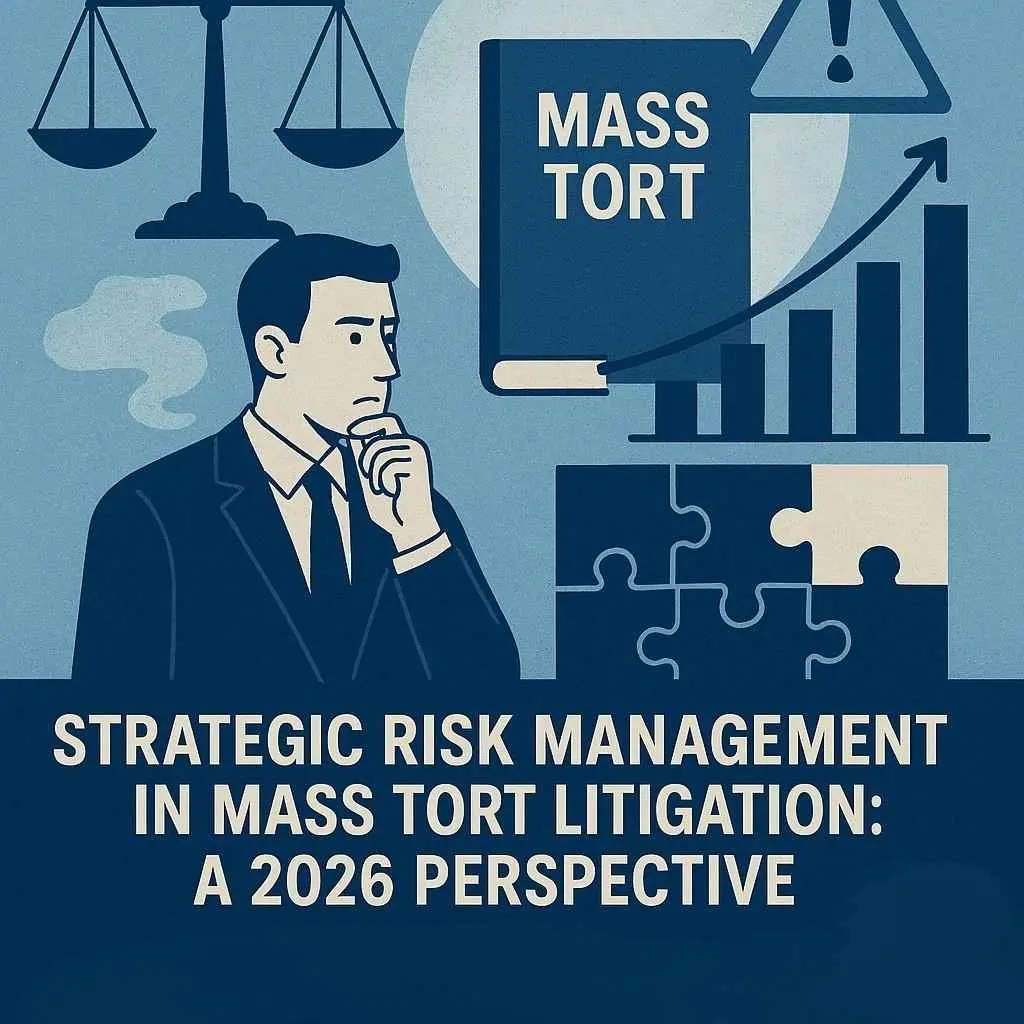
The core of strategic legal risk management lies in proactive compliance.
In 2026, waiting for a lawsuit to be filed is no longer an option.
Successful organizations are implementing real-time auditing systems that identify safety standard violations before they lead to Industrial Liability Claims.
By integrating these systems, companies can effectively reduce the risk of professional negligence charges and protect their long-term interests.
Technology and Risk Mitigation
Artificial Intelligence is playing a pivotal role in strategic legal risk management this year.
Predictive analytics now allow legal teams to model potential litigation outcomes based on historical data from Pharmaceutical Mass Torts.
This technological shift ensures that liability oversight is not just reactive but predictive, allowing for better settlement strategies and reduced litigation costs in mass tort environments.
The Global Impact of Environmental Standards.
We cannot discuss strategic legal risk management without addressing environmental accountability.
As we have seen in our research on Corporate Environmental Negligence, the 2026 regulatory landscape is unforgiving.
Strategic risk management now requires a global perspective on environmental safety standards to ensure that cross-border operations do not trigger massive liability claims.
This global oversight is a cornerstone of modern corporate legal strategy.
Data Privacy and Mass Tort Litigation
A new frontier in strategic legal risk management for 2026 is the management of digital evidence and data privacy.
Mass tort litigation now relies heavily on digital discovery.
Ensuring that a company’s data management protocols meet international safety standards is crucial.
Any failure in data integrity can be interpreted as professional negligence, leading to severe legal consequences and a breakdown in corporate accountability.
The integration of ethical auditing into strategic legal risk management is another key trend for 2026.
Modern corporations are now expected to demonstrate not just legal compliance, but a proactive commitment to moral responsibility in every aspect of their operations.
By adopting these higher safety standards, firms can effectively mitigate the threat of professional negligence claims, ensuring that their strategic legal risk management framework remains resilient against the evolving demands of global mass tort litigation.
Future Outlook:
The Evolution of Liability Looking ahead, strategic legal risk management will continue to adapt to new technologies and social demands.
The focus is shifting toward “Sustainability Litigation,” where professional negligence is measured by a company’s impact on future generations.
Staying ahead of these trends is essential for any legal team aiming for success in the competitive mass tort landscape of 2026 and beyond.
In the complex world of strategic legal risk management, 2026 has introduced the concept of ‘Dynamic Liability Mapping.
This approach allows legal firms to visualize potential professional negligence across different departments in real-time.
By utilizing these advanced visual tools, corporations can ensure that their safety standards are not only documented but actively enforced.
Furthermore, this transparency serves as a powerful defense in mass tort litigation, demonstrating a proactive commitment to corporate accountability and risk mitigation that resonates with both judges and regulatory bodies globally.
Who is responsible for injuries on private property?
Property owners are generally liable if they fail to maintain a safe environment or warn of known hazards.
Q: Why is Strategic Legal Risk Management vital in 2026?
A: It allows corporations to identify professional negligence and mitigate liability before high-stakes mass tort litigation occurs.
Q: How does technology impact legal risk mitigation today?
A: AI and predictive analytics provide strategic liability oversight, helping legal teams anticipate litigation trends and reduce settlement costs.



[…] Elite Tort Claims, we analyze how professional negligence and shifting legal frameworks become the focal point for high-stakes litigation this […]