Table of Contents
Energy Sector Liability the global energy landscape in 2026 is facing unprecedented legal challenges.
As the industry transitions toward complex offshore and renewable infrastructures, energy sector liability has become a focal point for maritime and industrial litigation.
At Elite Tort Claims, we specialize in evaluating how professional negligence in energy operations can lead to catastrophic losses and long-term legal disputes
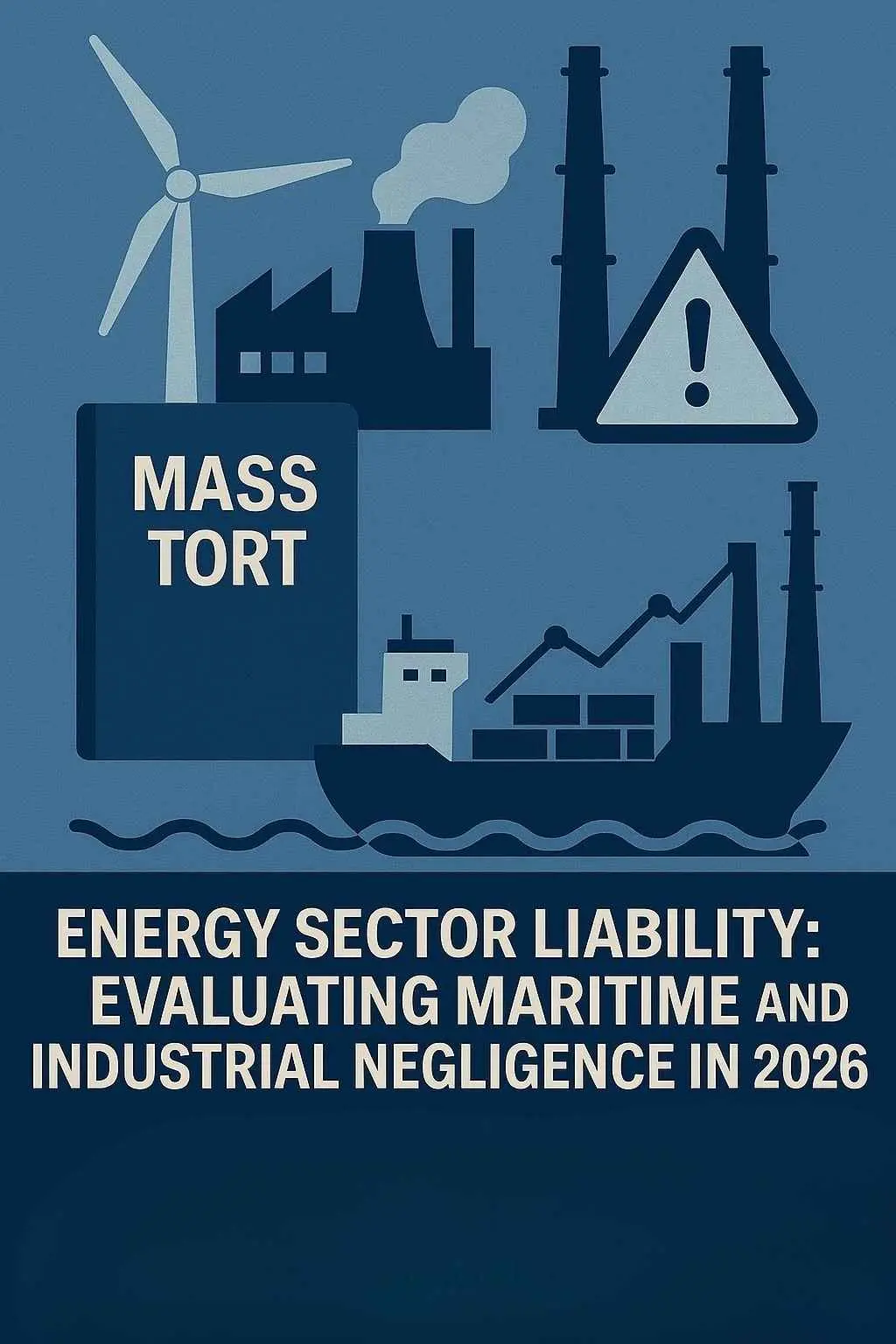
In 2026, energy sector liability is no longer confined to traditional onshore accidents.
The integration of high-tech maritime operations for offshore wind and oil exploration has introduced new dimensions of professional negligence.
Strategic liability oversight is now vital for companies to navigate the safety standards governing international waters and industrial zones.
A single failure in equipment maintenance or personnel training can trigger a massive wave of energy sector liability claims.
Maritime Negligence and Energy Infrastructure.
A significant trend in energy sector liability this year involves maritime transport and offshore drilling incidents.
When a vessel or a platform fails to meet modern safety standards, the resulting damage to marine ecosystems and industrial assets often leads to complex tort cases.
Proving professional negligence in these remote environments requires advanced forensic analysis and satellite data, making energy sector liability one of the most technical areas of law in 2026.
Strategic Risk Management in the Energy Industry
To mitigate the impact of energy sector liability, corporations are investing heavily in Strategic Legal Risk Management.
By identifying potential failures in industrial protocols early, firms can avoid the pitfalls of Industrial Liability Claims that often follow safety breaches.
This proactive approach ensures that professional negligence is addressed before it escalates into a public crisis.
The Intersection with Environmental Accountability
Environmental damage remains a core component of energy sector liability.
Much like the trends we analyzed in Corporate Environmental Negligence, the 2026 legal framework holds energy giants strictly accountable for ecological restoration.
For victims of industrial accidents, pursuing an energy sector liability claim involves navigating both national and international maritime laws to ensure fair compensation and corporate accountability.
Future Challenges:
Role of Automation
The rise of autonomous systems in offshore drilling has introduced a new layer of complexity to energy sector liability in 2026.
While automation is designed to reduce human error, failures in AI algorithms or sensor data can still lead to significant professional negligence claims.
Legal experts now argue that energy sector liability must evolve to address these technological failures, ensuring that corporate accountability remains intact even as the industry moves toward unmanned operations.
This shift requires a more detailed level of strategic liability oversight to protect both workers and the environment.
Compensation & Maritime Justice
Securing fair compensation for victims of maritime accidents within the energy industry is a cornerstone of energy sector liability today.
Litigation in 2026 often involves multi-jurisdictional disputes that require a profound understanding of international safety standards.
For any legal team, the success of an energy sector liability case depends on the ability to prove that professional negligence was a direct cause of the industrial failure, thereby forcing corporations to adhere to stricter ethical and safety protocols globally.
Renewables and New Risks
As we look beyond 2026, the shift toward green energy will redefine the parameters of energy sector liability.
Emerging technologies like carbon capture and offshore hydrogen storage will present new legal frontiers for professional negligence.
Staying ahead of these trends through robust strategic liability oversight is the only way for firms to ensure long-term sustainability and minimize energy sector liability risks in a rapidly changing world.
Q: What is the primary cause of Energy Sector Liability in 2026?
A: The primary causes are professional negligence in offshore operations and failures to meet updated industrial safety standards for renewable energy infrastructure.
Q: How does maritime negligence impact energy claims?
A: Maritime negligence can lead to catastrophic environmental damage and asset loss, requiring strategic liability oversight to navigate complex international laws.
Q: Can corporations mitigate energy sector risks?
A: Yes, through proactive strategic legal risk management and real-time auditing of industrial protocols to prevent professional negligence.


No comment